Getting Invertebrate-Compatible Marine Fish allows you to establish a community tank housing different species of living organisms that will coexist and tolerate each other without causing any harm or injury to the other. The idea of a perfect natural reef ecosystem is when you have all the different types of fish living harmoniously with the presence of other sea creatures like anemones, corals, starfishes, seahorses, snails, clams or even small crustaceans like cleaner shrimps. Selecting the correct mix of fish species will certainly save you a lot of time, effort and avoid the trouble having to deal with the potential damage. To quote an example, Angelfish especially, although seemingly innocent-looking, are very notorious and you should never put your trust in them, more over when you have a tank filled with all the precious and expensive imported corals. Put aside the issue on whether they were well-fed or otherwise, it is just part of their natural behavior, something which is not meant to change as they love to nip and graze on the coral patches. Let’s look some of the options and the type of invertebrate-compatible fish you can choose as companion for your reef tank.
Cardinalfish
 Cardinals are always the best option. If you have banggai cardinalfish (Pterapogon kauderni) or the popular pajama cardinalfish (Sphaeramia nematoptera), these little fellas are considered reef-safe and will live in harmony with all the other invertebrates. They make attractive addition to any community tank and will co-exist with the presence of other peaceful tank mates; best recommended would be the firefish. In the aquarium environment, they show a very close-knitted behavior with their own species often staying in groups, swimming very close to the stony corals, which are exactly the same behavior shown in the wild. They rarely display the level of aggression you could see on certain fish and the worst thing that could happen is the tiny worms living close within the vicinity becoming their prey. There are exceptions however, if you have the large-toothed cardinalfish which are considered solitary species and with their strong teeth, they can even crush the shell of crustaceans. Avoid having this at all cost!
Blennies
Blennies generally will not pose any serious threat in the aquarium and they thrive well in community reef tanks. They will go about with their daily activities, minding their own business and leaving the other invertebrates occupants alone. Bicolor blennies (Ecsenius bicolor) will make great addition and even for the Striped Fang (Meiacanthus grammistes) known for its strong teeth, both of them rarely disturb or harass the other fish including other smaller invertebrates. Problem only arise when you starve or underfeed them as they will start to nip on the coral polyps and the clams mantle. Make sure that you provide plenty of algae feed and place close observations when they start to show unusual behavior. Nevertheless, they certainly qualify as wonderful pet fish suited for the invertebrate tank.
Grammas
The group includes several interesting species and proves to be one of the most attractive must-have community occupants. If you are a fan of collecting small marine fish, you should not miss adding them to the list as they certainly make wonderful addition to any invertebrate or reef tank. Apart from their size and cute-looking face, they are also colorful, most eye-catching is the blend of orange and purple shades on body. Commonly seen and popular in the aquarium trade even among kids is the Royal Gramma (Gramma loreto). This fish can be kept in small groups and they love to hide among the nooks created by the pile of live rocks. They can show a very odd swimming style which easily catches the attention of any aquarist. They will do just fine with the presence of clams, snails, polyp or even starfish around.
Anemonefish
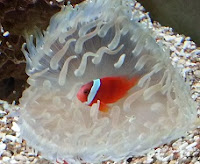 Can be very unpredictable though because the swing in mood can be very drastic and often comes as a surprise. Sometimes seasonal fish which have already acclimatized and living for years in the same tank will suddenly turn rowdy and attack small crustaceans. No explanation though but based on observation, it could be related to sexual maturity. Certain anemonefish like Clown (Amphiprion ocellaris), Maldive (Amphiprion nigripes) and Pink Anemonefish (Amphiprion perideraion) are certainly recommended over the other species in the same group. Most of them will establish close relationship especially towards sea anemones, but those commercially bred will not display close affinity like their cousins in the wild. In fact these fish will do just fine without even having the invertebrates in the tank. And because overall they are relatively tame, adding invertebrates such as starfish, snails or even clams to the tank will not pose much issue. The number one rule of thumb is always to introduce the fish as the last addition to an already established tank.