Golden Crossback Arowana is by far one of the most highly sought after arowana breed due to its brilliant gold color metallic sheen that shines when viewed under full-spectrum aquarium lighting. The fish is a favorite crossback species popular among arowana fanatics and because of its unique feature that projects an awesome display of coloration; no doubt it commands one of the highest selling price. The breed is graded according to its color intensity and what makes the crossback special is the line of golden scales that actually runs until the end of its body crossing the upper topmost scale (also called the 6th scale).
Golden crossback is actually an Asian variety of the arowana fish. Apart from the yellow gold color base, there is also the blue and also the green based of the crossback variety developed by experienced fish breeders. These days, with extensive cross breeding program undertaken by hobbyist, there is even a special variety which is called the 24K fully golden colored arowana. What makes this one truly remarkable is the absolute gold coloration covering the whole of its body and a quick glance would actually have you thinking on whether the fish was actually been painted gold. The variety first made its appearance couple of years ago in Malaysia and Singapore and today, it is one of the top high quality fish that could easily fetch few thousands dollars, sometimes even more. Another variety of the golden fish is the red-tailed golden arowana. Although somehow it is considered a lower grade specimen commanding a fraction of the price you would pay for a crossback, nevertheless they still share the same level of attention enjoyed by all arowana hobbyist. Unlike the crossback, the red tail only has golden scales showing on the 4th and 5th level and hardly goes above the 6th level and you can see the tail fins appearing slightly reddish.
Golden crossback is actually an Asian variety of the arowana fish. Apart from the yellow gold color base, there is also the blue and also the green based of the crossback variety developed by experienced fish breeders. These days, with extensive cross breeding program undertaken by hobbyist, there is even a special variety which is called the 24K fully golden colored arowana. What makes this one truly remarkable is the absolute gold coloration covering the whole of its body and a quick glance would actually have you thinking on whether the fish was actually been painted gold. The variety first made its appearance couple of years ago in Malaysia and Singapore and today, it is one of the top high quality fish that could easily fetch few thousands dollars, sometimes even more. Another variety of the golden fish is the red-tailed golden arowana. Although somehow it is considered a lower grade specimen commanding a fraction of the price you would pay for a crossback, nevertheless they still share the same level of attention enjoyed by all arowana hobbyist. Unlike the crossback, the red tail only has golden scales showing on the 4th and 5th level and hardly goes above the 6th level and you can see the tail fins appearing slightly reddish.
 Acquiring a well-developed flawless specimen and finding one that fulfills the criteria of a perfect fish is indeed very rare (to certain extent exotic) as sometimes there is always a noticeable defect seen on every individual fish such as the dreaded drop eye condition happening on some of the maturing fish and the protruding jaw effect which can really hurt the overall aesthetic value. Also depending on the arrangement of the scales and proportion of its weight against the body length, a well-balanced type is always hard to come by and because of these factors; it has made the selection process even more delicate if you intend to find one matching your requirements. Sometimes in a pool of similar crossback arowana fry born from the same parents, each and every one can develop to become a unique individual fish and there are several factors like foods and nutrition, living environment, tank size, water quality with all playing a part towards the development process.
These days, buying a juvenile arowana is perhaps the best option if you can’t afford paying the price for getting an adult fish. Usually potential buyers in Europe will actually travel across the globe going to South East Asia where most of the highly prized specimen all resides in this tropical region. Some breeders are known to sell their stock of fish with accompanying certificates so that one can trace the lineage of their pets going back to its genetic traits. However, be forewarned because most arowana just like koi fish does not show its true potential until several years later in which males will take even longer time before they are matured. During this period, chances of undesirable characteristic appearing and imperfection may occur and it all depends on luck. As one would say, a perfect fish is only one in a million and that is especially true for the golden crossback arowana. Accompanying the article here, you will find the above combo pictures showing one of the high-grade crossback specimens projected at different angles with the snapshots provided by one of our readers. As you can see, it is indeed a magnificent work of art. (Note with the use of tanning lights to increase color intensity of the fish)

 Believe it or not,
 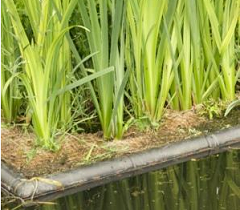 The idea on using a vegetable filter in koi ponds is that this will act as a natural biological filter system involving propagation of fast-growing aquatic plants to consume off the nitrates and phosphates present in the water so that the quantity left isn’t enough to provide opportunity for algae growth. Normally these chemicals are generated by the koi fish excreted in their waste and the more numbers of fish that you have stuffed in your pond, the higher these levels can get. Without an effective filter system, blanket weed and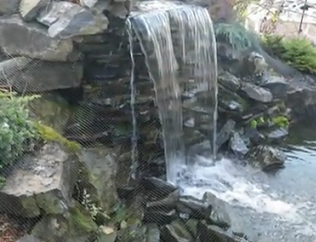

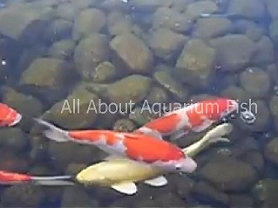 Getting your koi to grow to the largest jumbo size is often a challenging task and is always an ambition deep in the mind of every hobbyist. Imagine seeing a fat koi carp with sturdy and thick body mass and yet so colorful, swimming around in your pond as it creates a stunning looking view. However, getting your fish to achieve their maximum size using only natural methods without any growth hormone requires a lot of commitment and dedication and like the Japanese always said, discipline is the key.
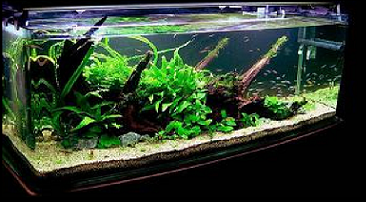 Quite often I will come across the same set of questions asked around on whether it might be okay for parents to get a fish tank for their children and what type of setup that will fit everything in terms of ease of care, maintenance and at the same time fulfill the fun and enjoyment part. If you have an interest going into the fish keeping hobby but at the same time have family with children to take care of, obviously there are a lot of questions pertaining as to whether you might have enough time to manage all that and there are several things that will come into mind about making the right decisions. Thus the article here is a compilation of all the common questions and hopefully putting my best effort to answer it will help to clear some doubts.
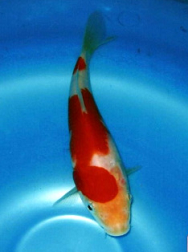 Stress in your koi pond can be due to several factors that we could have easily overlooked. Normally most conditions can be dealt with and corrected without bringing any harm or danger while other scenarios can be indeed complicated. Most often the impounding danger that lies within is not detected and some end results may not show up at all until it is too late and I can tell you that seeing your fish becoming sick is the last thing that you want to happen which will virtually kill off your interest in the hobby.
 Another root cause of stress affecting the aquatic system can be related to diet which are the foods that you provide to your fish. Diet which is lacking in certain basic component or nutrients will cause your pets to experience stressful condition normally related to low immune system and thus appear less healthy. I’ve always believe and advocate the importance of providing a varied diet combining